
The short answer
- The failed part sets the repair scope, from cleaning a sensor lens to replacing a spring or damaged section.
- Door size, weight and model determine which replacement parts fit and how much handling the work requires.
- Labor depends on access, related damage, testing and whether the repair takes place outside regular working hours.
What Repair Charges Cover in Materials and Labor
Start with the cause of the stoppage
A repair visit starts by separating a door problem from an opener or control problem. Your technician looks at the springs, lifting cables, rollers, tracks and door sections, then checks the opener and controls as appropriate. A motor that hums does not automatically need replacement; the door itself may be resisting movement.
A firm repair total needs an inspection because the same symptom can come from different parts. Garage door repair prices reflect the diagnosed work, matching components and labor, rather than the symptom alone. One of our local garage door partners explains the proposed repair and its price so you can decide whether to proceed.
Which part changes the work
The failed component determines what must be replaced, adjusted or tested.
| Part | What changes the repair scope |
|---|---|
| Spring, which balances the door's weight | Door weight, spring design and whether the door uses a pair |
| Cable or drum, the grooved wheel that winds the lifting cable | Cable condition, drum wear and the cause of uneven lifting |
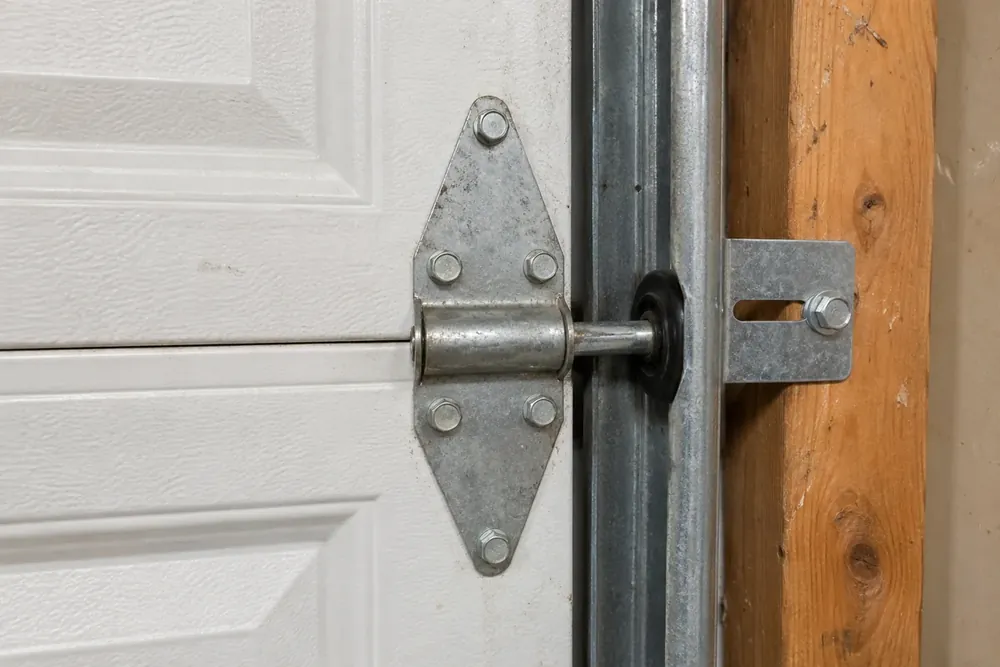
| Roller or track, which guides the door | Number of worn rollers, bent track and mounting condition |
| Opener gear or circuit board, its internal drive or electronic control | Exact opener model, diagnosis and matching part availability |
| Photo-eye sensor, which watches the opening near floor level | Lens condition, alignment, wiring and whether replacement is needed |
| Section, one horizontal part of the door | Matching dimensions, construction, finish and continued production |
The garage door spring replacement price depends on the spring system and the door it balances. For a two-spring setup, Clopay's safety checklist recommends replacing both together even when only one has broken. That makes the pair part of the repair scope.
A garage door spring repair price also needs a clear description of the work: adjusting an intact system differs from replacing a broken spring. A heavier door requires correctly matched components; selecting a spring by appearance alone does not establish a fit.
Older parts, access and working hours
An older door can take more investigation when a matching component is no longer made. Clopay's replacement-section advice ties section availability to continued manufacture of the model and notes that an older finish may not match. A section that fits matters more than a close-looking panel.
The final bill can also change with restricted working space, difficult access to hardware, related damage or after-hours labor. Discuss those conditions during the call. Your technician explains the necessary work rather than treating every stuck door as the same repair.
How worn parts affect nearby hardware
A small mechanical problem can keep wearing nearby parts while the door continues cycling. A worn roller may drag at the same point, and repeated resistance can add track or hinge wear. Clopay's service advice describes how worn rollers and misaligned tracks can increase wear elsewhere.
A crooked door or a visibly frayed lifting cable is a clear reason to stop using the door and call now. Keep people clear of the opening. Do not run the opener against a crooked door, and leave springs, cables, drums and bottom brackets to your technician. Clopay identifies spring tension at the bottom brackets; those brackets are not ordinary loose hardware.
Simple observations to share during a call
Remote batteries, the wall control's lock switch and photo-eye condition are useful checks that never have to delay calling. Genie's wall-console support explains that its Sure-Lock setting can block wireless controls. Check the setting against your model's instructions.
If the door is stable and the sensors are safely reachable, Genie's maintenance guidance calls for unplugging the opener before maintenance, wiping photo-eye lenses with a soft dry cloth and checking alignment through their indicator lights. A fresh remote battery may resolve a control problem; it cannot correct mechanical damage. Never bypass the sensors. Genie's opener safety page says not to operate a door with a broken spring, either manually or with the opener.