
The short answer
- Repair often makes sense for an isolated spring, cable, roller or opener fault when the door remains sound.
- Replacement deserves consideration when several sections are damaged, compatible panels cannot be matched or rot weakens the door.
- Door balance, repeated track trouble and insulation needs help determine which option addresses the underlying problem.
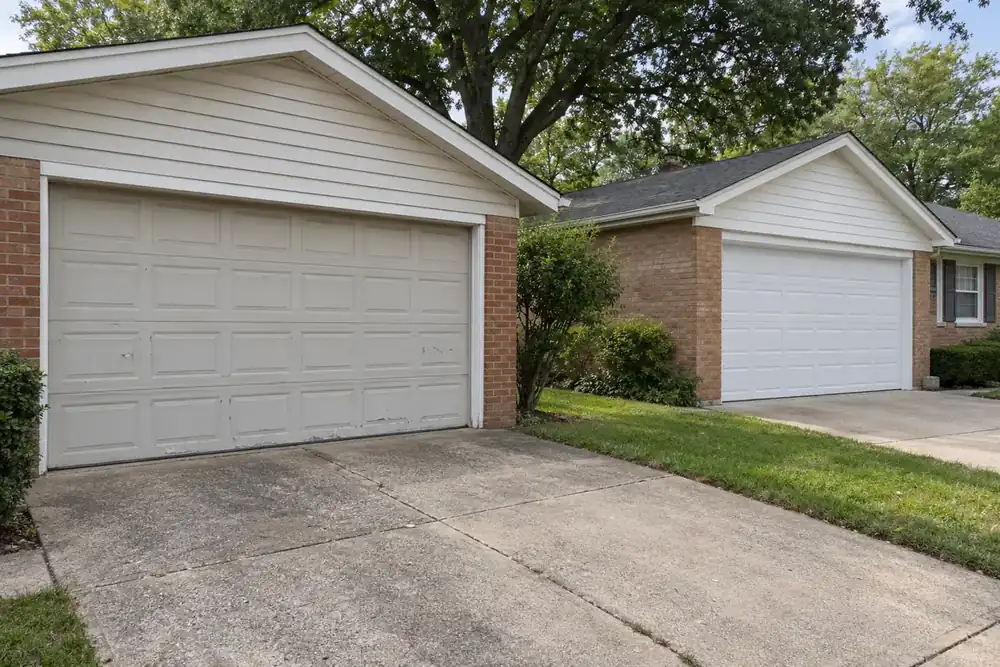
Match the Work to the Failed Part
Repair suits an isolated failure in an otherwise sound door; replacement becomes more useful when damage extends across the sections or the door no longer suits the garage. For garage door repair or replacement near Dayton, the decision starts with the condition of the whole system. A motor fault alone does not establish that the door needs replacing.
One failed part often has a repair path
A broken spring, snapped cable, worn roller or opener fault can often be addressed without replacing the door. Garage door repair may replace a failed part or correct its alignment, depending on the cause. Springs balance the weight, cables carry the lifting force, and rollers are the small wheels that travel inside the tracks.
The Clopay replacement-parts page identifies springs, sections, tracks and openers as work for a garage door professional. A snapped cable calls for cable repair and an inspection of what damaged it. Replacing only the visible broken piece leaves the cause unresolved when a worn support or track problem is also present.
Can a damaged garage door be repaired without changing every section?
A damaged door can often be repaired when the damage is limited and the remaining sections and hardware are sound. One dented section may be replaced with a compatible section. A shallow scuff alone does not establish a need for a new door; a crease across a hinge attachment deserves closer inspection.
Can garage door panels be repaired after a dent?
Some minor panel dents allow repair, while a folded section or damaged joint may need section replacement. Matching means more than choosing the same color: dimensions, joint shape and hardware must fit the existing door. If a matching section is no longer made, compare complete replacement with retaining a door that cannot accept the right part.
Widespread damage shifts the decision
Several damaged sections, rust through the bottom or wood rot make replacement worth discussing. Surface discoloration and a weakened section are different findings. A technician checks how much sound material remains around hinges and other attachment points rather than judging from the outside finish alone.
An uninsulated door on a heated garage also deserves comparison with an insulated replacement. Insulation and perimeter seals affect comfort, but a new door does not fix every source of heat loss. Repeated off-track trouble needs its cause traced: worn rollers or loose supports may be repairable, while distorted sections can make a new door the more complete solution.
What unresolved faults can cause
Waiting leaves the original fault in place, though the effect depends on whether the door is used and what has failed. The table describes unresolved conditions and possible effects of continued use.
| Part or condition | Repair or replacement direction | Unresolved condition | Possible effects of continued use |
|---|---|---|---|
| Broken spring | Replace the spring and check balance. | The missing lift assistance remains. | Repeated powered attempts can strain the opener. |
| Snapped cable | Replace the cable and inspect its path. | Uneven support remains unresolved. | Attempts to move the door can add damage. |
| One dented section | Repair a minor dent or fit a compatible section. | A cosmetic dent may look unchanged. | A working joint crease may worsen with use. |
| Opener fault | Diagnose controls, drive and motor separately. | Access may stay intermittent. | The same unresolved fault can keep interrupting use. |
| Worn rollers | Replace suitable rollers and inspect the tracks. | Rough movement usually persists. | Continued cycling may increase wear. |
| Several damaged or unmatched sections | Compare a complete new door. | Damage does not correct itself. | Repeated flexing may deepen existing deformation. |
| Rot or rust through the bottom | Assess section replacement against a new door. | Lost material remains missing. | Continued moisture exposure can worsen deterioration. |
A crooked door, loose cable, cracked section joint or repeated derailment is a clear sign to stop using the opener and call. A door with an occasional control fault also merits a call; a visible mechanical failure is not a requirement for help.
What the visit checks
The visit checks sections, hinges, rollers, tracks, supports, cables, springs and door balance before recommending work. Your technician also separates a door problem from an opener problem. Garage door opener repair or replacement depends on the motor and controls as well as the door they move. A replacement opener does not restore a weakened door section.
One of our local garage door partners explains which components are reusable and why the proposed work addresses the cause. For a new door, the discussion includes compatible tracks, lifting hardware, opener connection and removal of the old door.
Should I repair or replace my garage door myself?
Door replacement and repairs involving lifting parts belong with a technician. If you wonder, "Can I install a garage door myself?" or "Can I replace my own garage door?", consider that the job includes loaded springs and supported door sections. Leave all adjustments to the bottom brackets, drums, cables and springs to your technician.
Stay out of the door's path and do not operate a crooked door or one with a broken spring. Genie's maintenance guidance says to unplug the opener before maintenance and leave tensioned spring components to professional service. Optional checks include the remote battery, the wall control's lock switch and visible photo-eye alignment lights; Genie's troubleshooting instructions cover those control checks. Photo eyes are the sensors near the floor; a soft, dry cloth can remove dust from their lenses. Call now and share any observations during the conversation.