
The short answer
- Opening width and height affect the amount of door material and the lifting hardware required for the new door.
- Steel construction, insulation, window choices and carriage styling change the door package and the features included.
- Installation work includes fitting the system, with old-door removal, disposal and an added opener affecting the total scope.
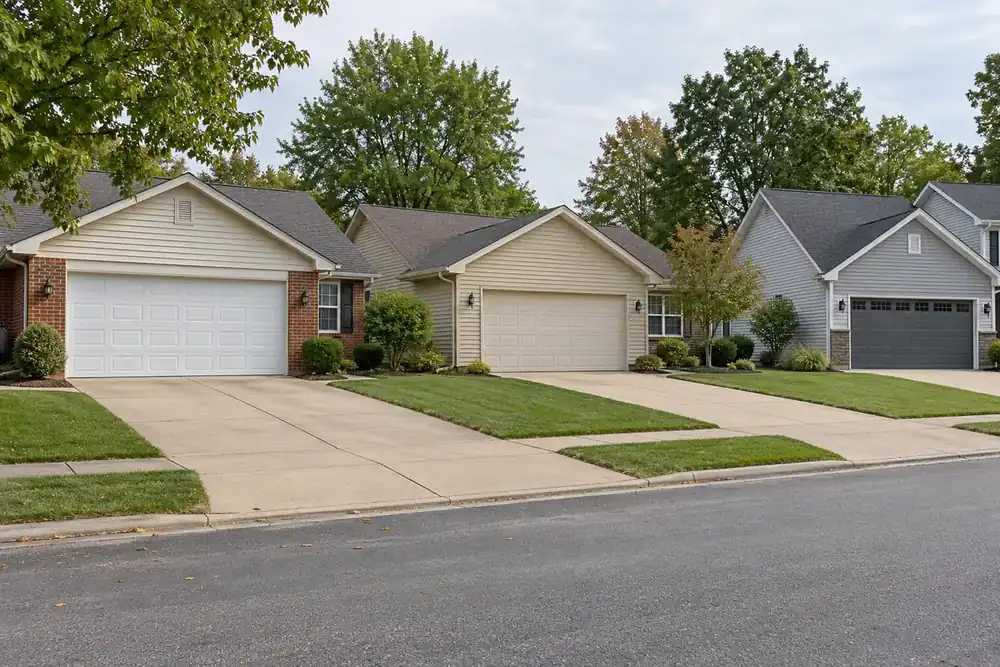
Door Choices and Installation Work That Shape the Total
Size comes first
Door width and height establish the starting point for a replacement. A double-width opening needs a different door and lifting system than a single opening. Two separate single doors also involve two sets of hardware, so the number of openings matters alongside their dimensions.
Your technician measures the opening and the clearance above and behind it. Low ceilings, shelving or an existing opener can affect the track layout. Clopay's installation information identifies size, material, insulation, windows and finish as cost factors. A catalog door alone does not describe the fitted job.
Construction changes more than appearance
Steel thickness, the number of layers and the insulation type all affect the door you select. Gauge is the measure used to describe steel thickness; Clopay explains that a lower gauge number means thicker steel. Compare the full construction because an insulated door with inner and outer steel layers differs from a single steel skin.
R-value describes an insulating material's resistance to heat flow. Amarr's energy-efficiency explanation distinguishes that material rating from U-factor, which tests heat transfer through a whole door assembly. A higher R-value does not describe every seal, joint or window in the installed opening.
Windows add daylight and introduce glass and frame choices. Carriage styling, which gives an overhead door the look of older swing-out doors, may use stamped patterns or added decorative layers. Compare the actual construction behind the look.
Compare the same installed scope
The cost of a garage door with installation includes the hardware and labor needed to make it work as a system. Use a written scope to compare the door itself with removal, fitting and testing.
| Choice or task | What belongs in the comparison |
|---|---|
| Single or double width | Opening dimensions and number of doors |
| Steel and insulation | Gauge, layers, insulation type and thermal rating |
| Windows and carriage styling | Glass selection, pattern, overlays and finish |
| New track and lifting hardware | Track layout, springs and cables matched to the door |
| Old-door removal | Taking down the existing system and handling disposal |
| Opener added during the visit | Motor unit, compatible controls, installation and testing |
Clopay recommends new track and hardware matched to the replacement door's weight and configuration. Springs and cables must suit the new door too. Keeping old hardware merely because it is already mounted can leave the systems mismatched.
Your technician evaluates whether the opener already installed is in suitable condition and will work with the replacement door. Adding a new opener during the installation brings separate equipment and setup work into the scope. One of our local garage door partners will explain the door package, labor and selected additions, then go over the total before installation starts.
The work takes hours, not just delivery
Professional installation typically takes a few hours, according to https://www.amarr.com/us/en/support/residential-garage-door-and-commercial-door-faqs. Removing the old door, changing tracks, fitting the new sections, balancing the door and testing the opener all take time. Difficult access, repairs to the opening or an added opener can extend the work. Your technician explains the expected duration for the actual job.
The installed cost of a new garage door also depends on what has to come out. Include dismantling the old door and disposal in the discussion rather than assuming those tasks are part of the door purchase.
When an aging door changes the decision
Mechanical wear can continue while you consider replacement. A sticking roller makes travel rough, and repeated rubbing can add wear to nearby components. Clopay describes that wear pattern in its service information. Faded paint alone does not explain a mechanical failure, so discuss repair alongside replacement.
A door that sits crooked is a clear sign to stop operating it and call. Stay out of the opening and do not run the opener against the door. Genie's safety guidance also rules out manual or powered operation when a spring is broken. Springs, cables, drums and bottom brackets need your technician's attention.
Call now; simple observations are optional. With a stable door, you can check the remote battery and the wall control's lock setting. Genie explains that its vacation lock blocks wireless operation. For safely reachable photo eyes, Genie's maintenance instructions say to unplug the opener before maintenance, clean the lenses with a soft dry cloth and check the alignment indicators. Leave a tilted door untouched.